The global women's apparel market is worth roughly $900 billion in 2026, and online's share keeps climbing. Shopify powers over 4.8 million stores worldwide, and fashion remains its single largest category. If you're thinking about starting an online women's clothing store, the timing and the platform both work in your favor.
This guide covers everything from picking a niche to getting your first sales -- including the customer support question most new store owners don't think about until it's already costing them money.
Why Women's Fashion on Shopify
A few things make this combination particularly strong in 2026:
- Market size and growth. Women's fashion e-commerce is projected to grow at roughly 8% annually through 2029. The addressable market is enormous and still expanding.
- Shopify's fashion infrastructure. Shopify has invested heavily in fashion-specific features: variant management for sizes and colors, built-in inventory tracking across multiple locations, Shopify Markets for international selling, and a theme ecosystem designed for visual merchandising.
- Low barrier to entry. You can launch a professional-looking store for $39/month (Basic plan). No developer required. No minimum inventory if you're dropshipping or doing print-on-demand.
- Built-in payments and fulfillment. Shopify Payments, Shop Pay (which converts at 1.72x higher than standard checkout), and the Shopify Fulfillment Network mean you're not stitching together five different services.
Yes, competition is real — there are a lot of clothing stores on Shopify. But that's also validation that the market works. The stores that win are the ones that pick a clear niche, nail their product presentation, and handle customer questions before the buyer loses patience.
Choosing Your Niche
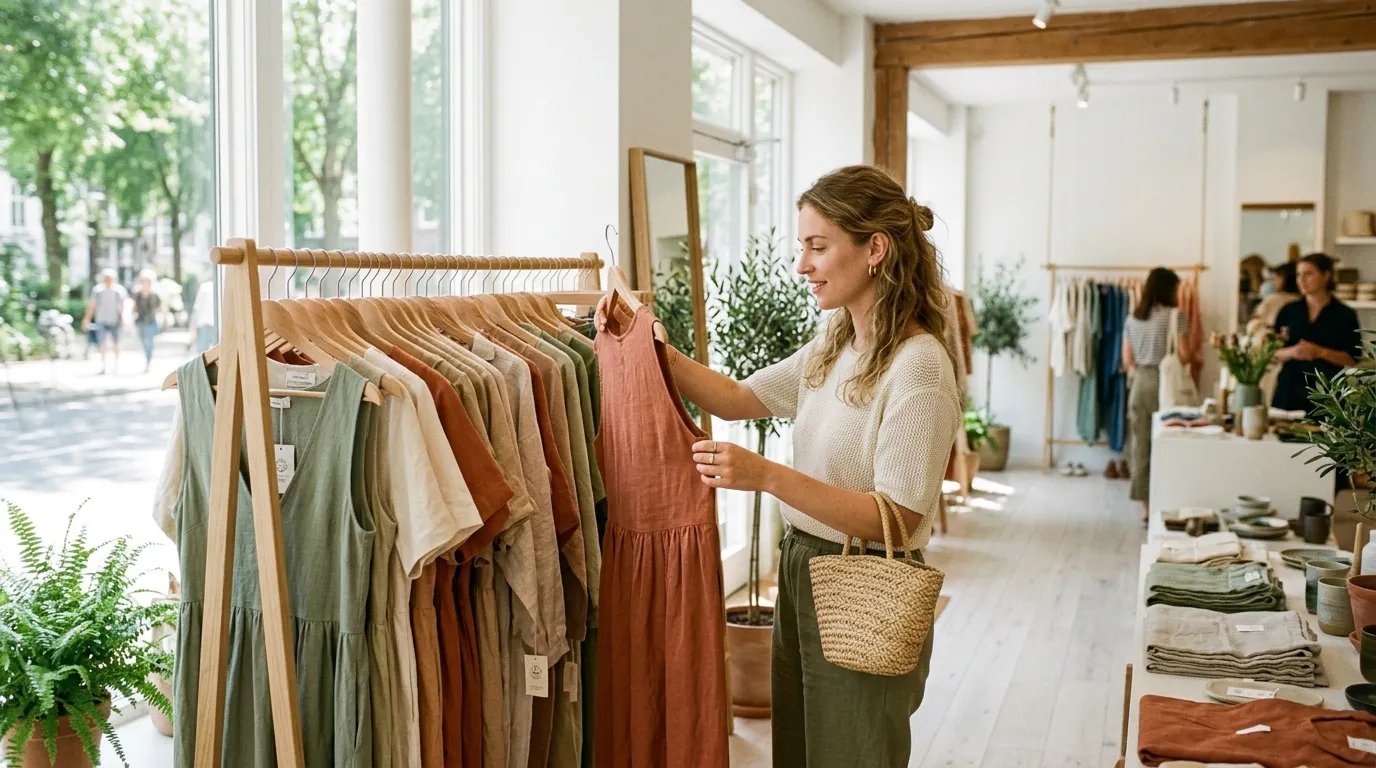
"Women's clothing" is not a niche — it's a category. To stand out against established brands, you need to be specific about who you're serving and why they'd pick you over Amazon.
These niches have strong demand and real room for new entrants in 2026:
- Sustainable and ethical fashion. The secondhand and sustainable apparel market is expected to reach $350 billion globally by 2028, according to ThredUp's annual resale report. Consumers, especially Gen Z and millennials, increasingly care about where their clothes come from.
- Plus-size fashion. The plus-size women's clothing market is valued at over $288 billion and historically underserved by mainstream brands. There's genuine demand and less competition.
- Modest fashion. Valued at over $300 billion, modest fashion serves Muslim, Jewish, and Christian communities as well as anyone who prefers more coverage. Fast-growing, international audience.
- Athleisure and activewear. The global athleisure market hit $380 billion in 2025 and is still growing. Think yoga wear, running gear, or gym-to-brunch crossover pieces.
- Luxury resale. Pre-owned designer clothing is booming. The RealReal's 2025 report showed continued double-digit growth in consignment luxury.
- Occasion wear. Wedding guest dresses, cocktail attire, vacation wear. These are high-intent purchases where people actively search for specific items.
Pick the niche that overlaps with your own knowledge and passion. If you don't understand your customer, you won't be able to write product descriptions that resonate, and you won't know which questions they'll ask before buying.
Setting Up Your Shopify Store
Theme Selection
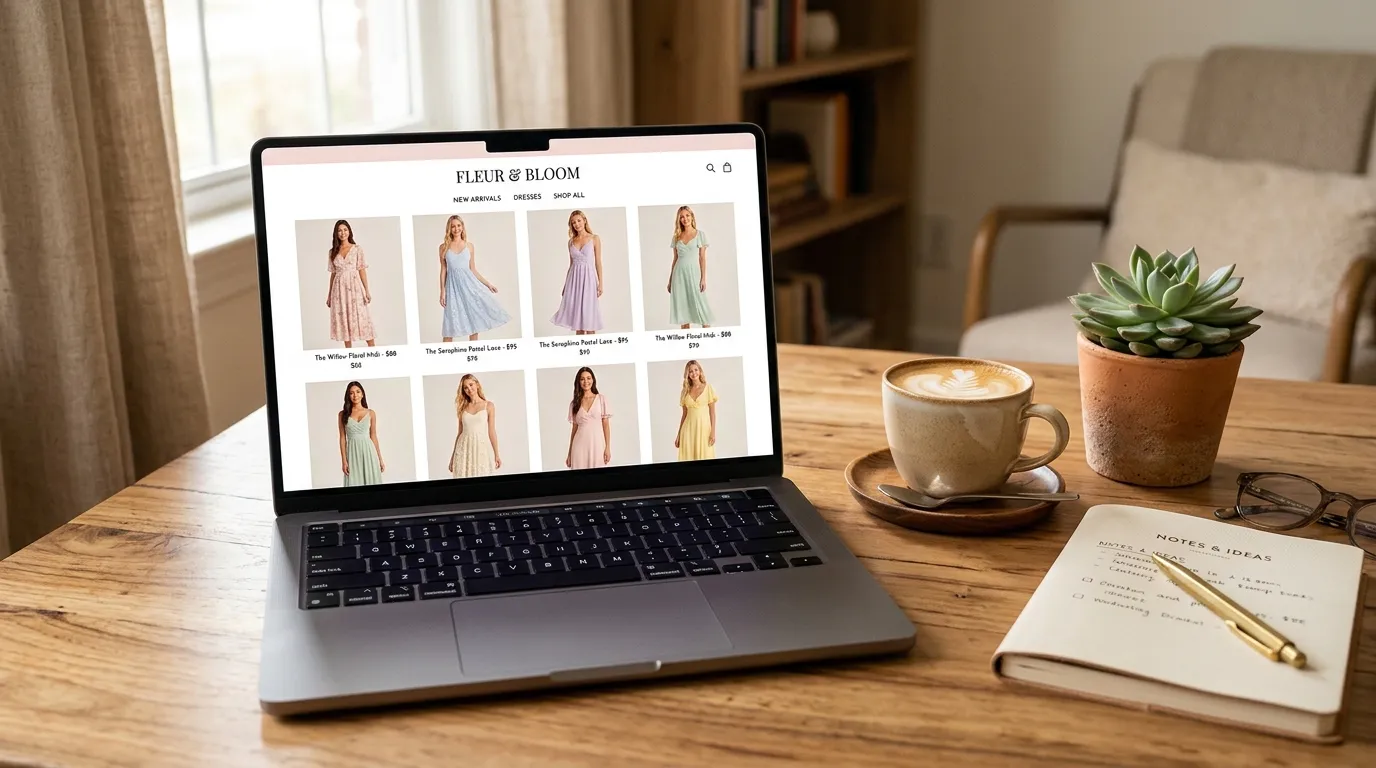
Your theme is your storefront. For women's fashion, visual presentation is everything. These free and premium Shopify themes work particularly well:
- Dawn (free) -- Shopify's default theme. Clean, fast, and surprisingly capable for fashion. Great starting point if you want to keep costs low.
- Sense (free) -- Warm, editorial feel. Designed for brands that want to tell a story alongside their products. Works well for sustainable and artisan fashion.
- Taste (free) -- Bold imagery, lookbook-style layouts. Good for trend-driven or streetwear-adjacent brands.
- Premium options. Themes like Prestige, Impulse, and Broadcast ($300-400 one-time) offer advanced features like color swatches on collection pages, quick-buy modals, and sophisticated filtering. Worth it once you have revenue.
Performance tip: Whatever theme you choose, check its PageSpeed score before committing. Google uses Core Web Vitals as a ranking factor, and clothing stores with heavy imagery need fast themes. Dawn consistently scores 90+ out of the box.
Product Photography
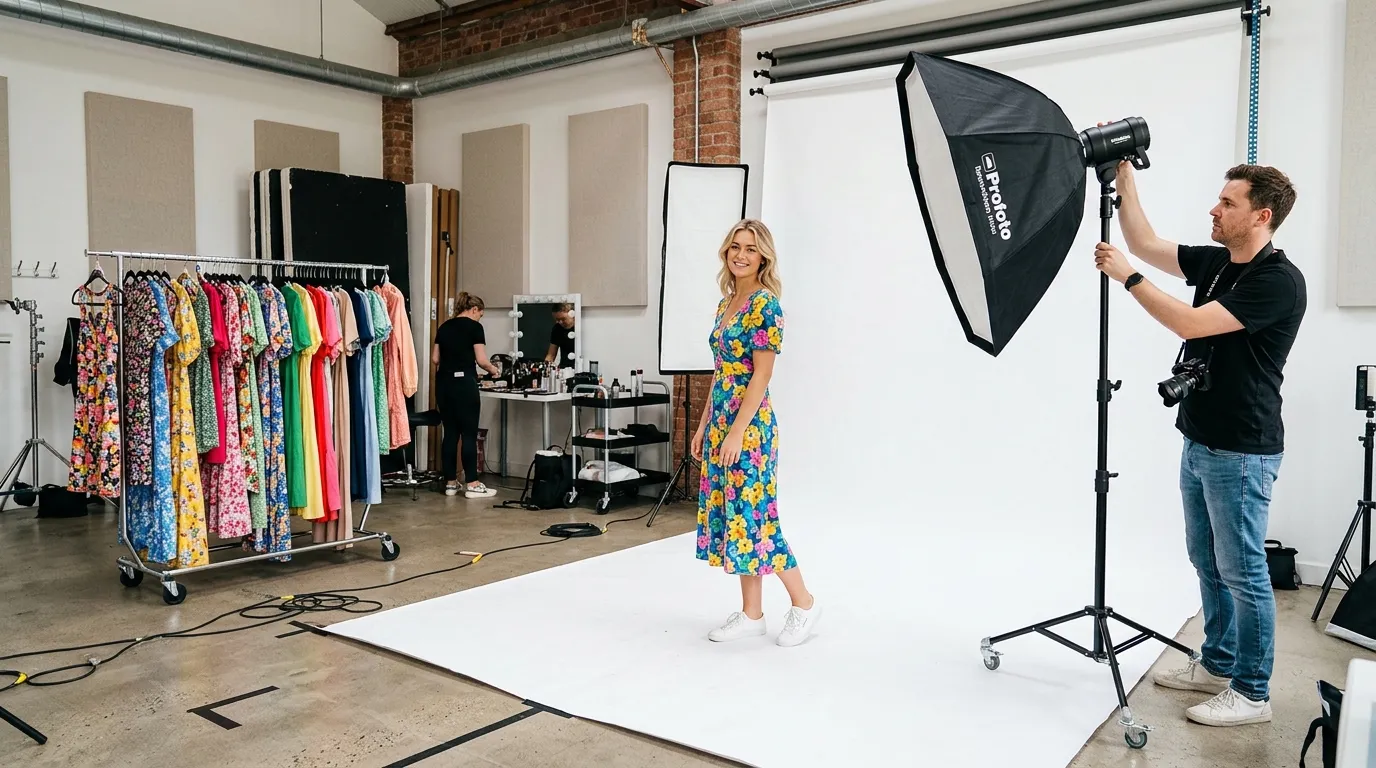
In fashion e-commerce, photography is the product experience. Customers can't touch the fabric or try it on, so your photos need to do the heavy lifting.
- Minimum: Clean white-background shots from multiple angles. Front, back, side, detail close-ups.
- Better: On-model photography showing fit on real people. Shopify's own research shows that on-model images increase conversion rates by up to 30% for apparel.
- Best: Lifestyle shots that show the clothing in context (street style, office, dinner out) alongside clean product shots. This gives customers both the practical info and the aspirational vision.
- Budget option: A smartphone with good natural lighting, a plain background, and a friend as a model can produce surprisingly professional results. Consistency matters more than expensive equipment.
Size Guides
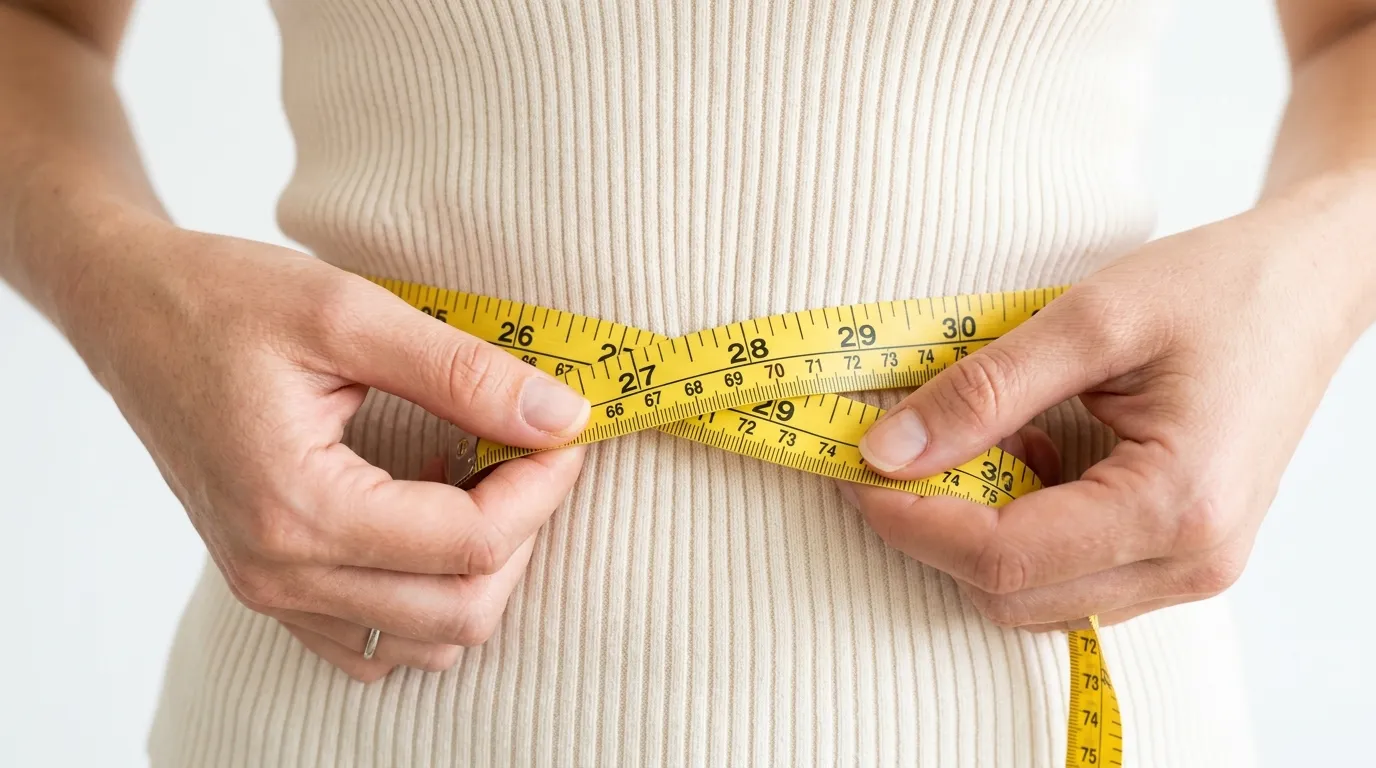
This is non-negotiable for clothing stores. "Is this true to size?" is the single most asked question in women's fashion e-commerce. A clear, accurate size guide reduces returns (which average 20-30% for online apparel) and reduces the volume of pre-purchase support questions.
- Include measurements in both inches and centimeters
- Provide a "how to measure" diagram
- Note if items run small, true to size, or large
- If possible, show the model's height and what size they're wearing
Even with a great size guide, customers will still ask about fit. We'll get to how to handle that at scale shortly.
Essential Apps and Tools
Keep your app stack lean. Every app adds JavaScript, which slows your store. Here are the ones that actually earn their keep for fashion stores:
| Category | Recommended | Why |
|---|---|---|
| Reviews | Judge.me or Loox | Photo reviews are critical for fashion. Customers want to see real people wearing the clothes. |
| Email marketing | Klaviyo | Industry standard for Shopify. Abandoned cart flows, back-in-stock alerts, post-purchase sequences. |
| Returns | Loop Returns or ReturnGO | Self-serve returns reduce support load. Encourage exchanges over refunds to retain revenue. |
| Size recommendations | Kiwi Sizing or True Fit | AI-powered fit recommendations reduce sizing questions and returns. |
| Loyalty | Smile.io | Repeat purchase rate is everything in fashion. Points and referral programs keep customers coming back. |
Start with reviews and email marketing. Add the others as your order volume justifies them.
Product Descriptions That Sell
Most clothing stores write lazy product descriptions. "Beautiful floral dress. Perfect for summer." That tells the customer nothing useful and does zero SEO work.
Good fashion product descriptions cover four things:
- Fabric and material. "95% organic cotton, 5% elastane. Soft, breathable, with slight stretch." Customers want to know what they're getting. This also matters for customers with allergies or ethical preferences.
- Fit and sizing. "Relaxed fit through the body. Runs slightly oversized -- if you prefer a closer fit, size down. Model is 5'7" and wears size S." This preempts the most common support question.
- Care instructions. "Machine wash cold, tumble dry low. Iron on low heat if needed." Sounds boring but it prevents returns from customers who assumed something was machine-washable when it wasn't.
- Styling suggestions. "Pair with high-waisted jeans and sneakers for a casual weekend look, or tuck into a midi skirt with heels for date night." This helps the customer visualize owning it, which nudges the purchase decision.
Write descriptions for humans first, search engines second. But do include relevant keywords naturally: "women's linen midi dress," "plus-size workout leggings," "sustainable cotton t-shirt." These long-tail terms drive organic traffic.
The Customer Support Question

Most Shopify guides stop at this point. They cover setup, products, and marketing, then leave you on your own when customers start asking questions. And in women's fashion, trust me — they will ask questions.
The top pre-purchase questions for women's clothing stores, consistently, are:
- "Is this true to size?"
- "What's the fabric like?"
- "Can I exchange for a different size?"
- "How long does shipping take?"
- "What's your return policy?"
- "Is this see-through?"
- "Will this shrink in the wash?"
Every unanswered question is a potential abandoned cart. Baymard Institute puts the average cart abandonment rate at 70%, and unresolved product concerns are a major factor.
When you're just starting out, you can answer these yourself. But it doesn't scale. You're sleeping while your customers in different time zones are shopping. You're at dinner while someone in Tokyo is deciding between your dress and a competitor's.
This is where an AI chatbot becomes genuinely useful -- not as a gimmick, but as practical infrastructure. An AI FAQ chatbot sits on your store 24/7, answers these repetitive questions instantly from your FAQ content, and does it in whatever language your customer is using. You write your FAQs once in English (or whatever language you operate in), and the AI handles the rest.
For a women's clothing store, a solid chatbot FAQ setup looks like:
- Sizing and fit information for each product category
- Fabric composition and care instructions
- Shipping times and costs by region
- Return and exchange policy details
- Order tracking instructions
30-50 well-written FAQs will cover the vast majority of questions. And when the AI can't answer something -- a complex exchange situation, a damaged item complaint -- it routes the customer to you directly. The bot handles the volume; you handle the exceptions.
If you're on Shopify, adding a chatbot is a one-line code snippet in your theme -- our Shopify integration guide walks through it in about 5 minutes. And if you're curious about the cost math, here's how AI chatbots reduce support costs by up to 80%.
Marketing Your Women's Clothing Store
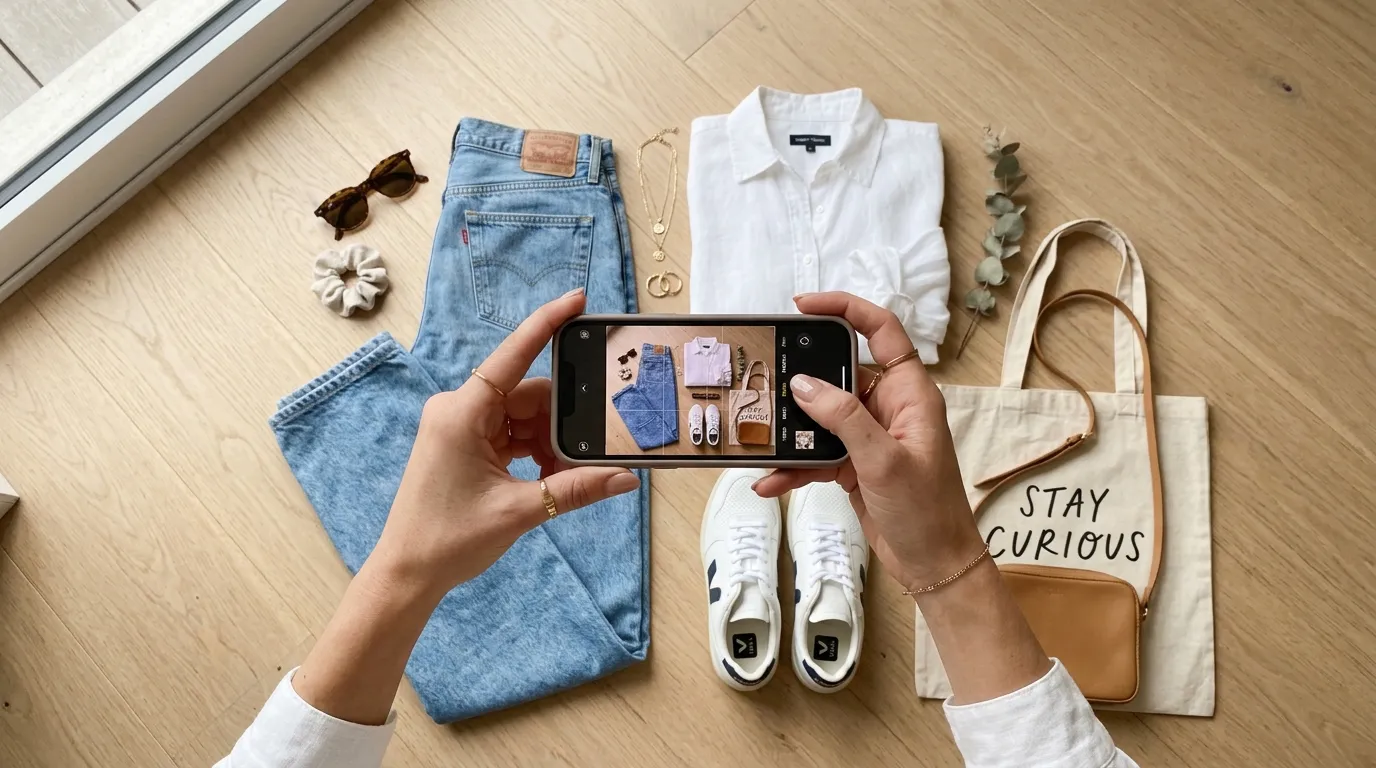
Product and store setup are half the equation. You also need people to find you.
Instagram and TikTok
Fashion is inherently visual, which makes these platforms ideal. Some practical tactics:
- Reels and TikToks outperform static posts for reach. Short styling videos, "outfit of the day" content, and behind-the-scenes footage of product sourcing or photoshoots all work well.
- User-generated content (UGC) is your best marketing asset. Encourage customers to tag your brand and reshare their photos. This builds social proof and gives you free content.
- Instagram Shopping lets customers buy directly from your posts. Connect your Shopify catalog via the Shopify-Meta integration and tag products in every relevant post.
Influencer Partnerships
You don't need mega-influencers. Micro-influencers (10K-50K followers) in your specific niche often have higher engagement rates and charge significantly less -- sometimes just free product in exchange for content. Influencer Marketing Hub's 2025 report found that fashion remains the top category for influencer partnerships, with an average ROI of $5.20 per dollar spent.
Find influencers whose audience matches your niche. A sustainable fashion brand partnering with an eco-lifestyle creator makes sense. The same brand partnering with a fast-fashion haul creator doesn't.
SEO and Content
Organic search is a slower burn but compounds over time. Focus on:
- Product page SEO. Descriptive titles ("Women's Linen Midi Dress - Sage Green"), alt text on all images, and those detailed product descriptions we covered earlier.
- Blog content. Style guides, trend roundups, and "how to wear" posts drive top-of-funnel traffic. A post like "How to Build a Capsule Wardrobe for Work" can rank for months and bring in customers who weren't looking for your store but find your products through your content.
- Collection page optimization. "Plus Size Summer Dresses" as a collection title ranks better than "Summer Collection 2026."
Selling Internationally
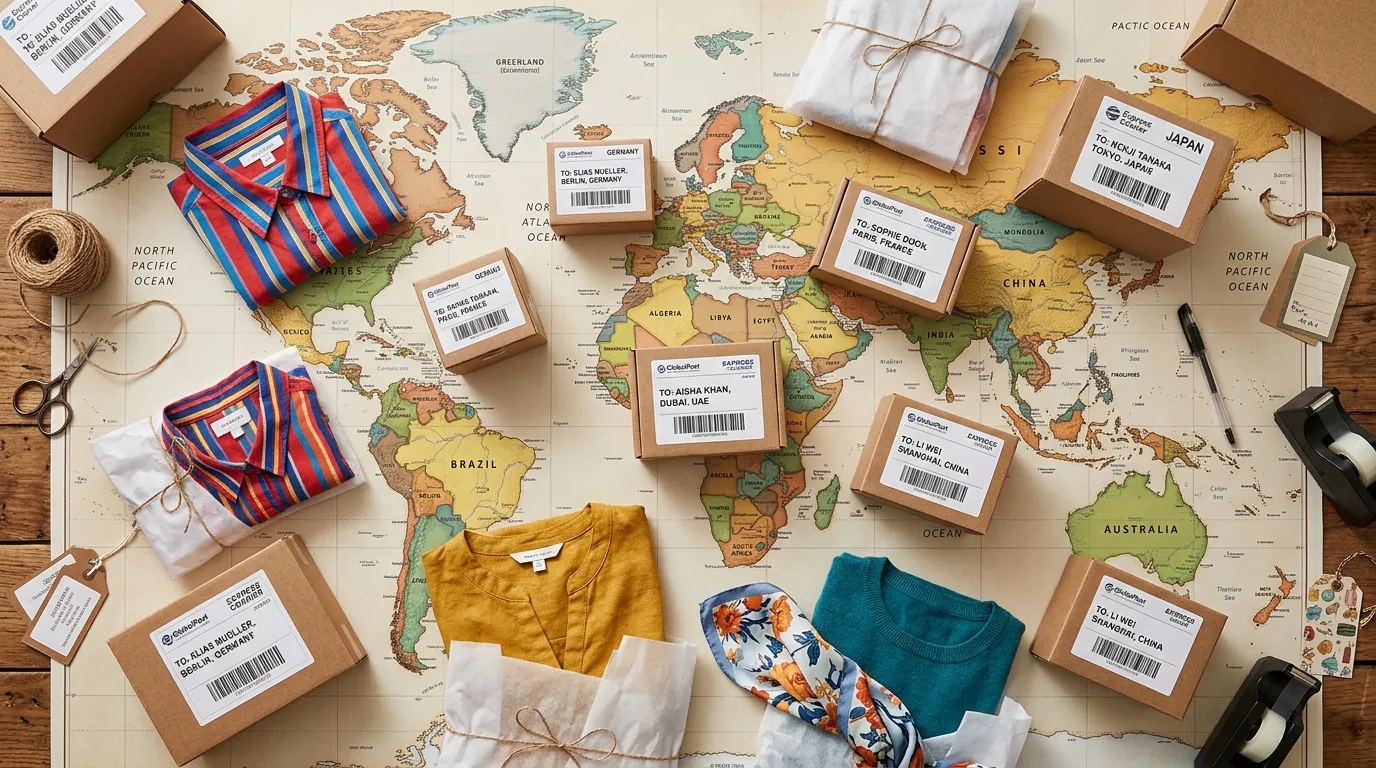
One of the biggest advantages of online fashion retail is that your customer base isn't limited to your country. Shopify Markets makes international selling significantly easier than it used to be -- you can set up local currencies, market-specific pricing, and regional domains from a single store.
But here's what Shopify Markets doesn't solve: customer support in other languages.
If you're selling to customers in Japan, Germany, Brazil, and the UAE, those customers will ask questions in Japanese, German, Portuguese, and Arabic. Hiring multilingual support staff is expensive and rarely makes sense for a growing store. Machine-translating support tickets is slow and awkward.
This is where a multilingual chatbot earns its keep. You maintain one set of FAQs in English. The AI serves answers in 50+ languages, automatically. A customer in Tokyo asks about sizing in Japanese. A customer in Sao Paulo asks about shipping in Portuguese. Both get instant, accurate answers from the same English FAQ -- no translation staff, no delay.
76% of consumers prefer buying in their native language. If you're going international, meeting that expectation in your customer support -- not just your product pages -- is a real competitive edge.
Your Launch Checklist
Here's what to have in place before you start driving traffic:
- Niche defined. You know exactly who you're selling to and why they'd buy from you.
- Store set up. Theme installed, branding applied, navigation clear.
- Products listed. At least 15-20 products with quality photos, detailed descriptions, and accurate sizing info.
- Size guide published. Clear, with measurements in multiple units.
- Policies written. Shipping, returns, exchanges, privacy. These aren't optional for building trust with new customers.
- Email capture active. Pop-up or embedded form offering 10-15% off first order in exchange for email signup.
- Reviews app installed. Set up automatic review request emails post-purchase.
- Customer support covered. Whether that's a chatbot, a FAQ page, or both -- make sure someone (or something) can answer questions at 2 AM.
- Social accounts linked. Instagram and TikTok at minimum, with product tagging enabled.
- Payment and shipping configured. Shopify Payments active, shipping rates set, taxes configured for your target markets.
Getting Started
Launching a women's clothing store on Shopify has never been more accessible. The platform handles the technical infrastructure. AI handles the repetitive customer support. Your job is the part that actually needs a human — curating products people love, understanding your customer, and building a brand worth coming back to.
Start small. Pick one niche, list 20 products, set up your FAQ coverage, and start driving traffic. You can iterate on everything else as you learn what your customers actually want.
And when those midnight "Is this true to size?" messages start rolling in — and they will — you'll be glad something is there to answer them while you sleep. Annona Bot offers a 14-day free trial if you want to see how it works on your store.