If you're selling to Japanese customers on Shopify, your store policies aren't just a translation task — they're a legal requirement, a trust signal, and a conversion lever all at once. Get them wrong and you face anything from cart abandonment to administrative penalties under Japan's Act on Specified Commercial Transactions (特定商取引法).
Most stores treat policy translation as a one-time copy-paste exercise. That misses the actual problem: even after you translate the pages, Japanese customers will still ask questions about them in Japanese — and your support inbox isn't ready for that.
This guide covers what you legally need to publish in Japanese, the four customer-facing policies that need careful translation (not machine output), the keigo trap that breaks most translations, and the support-side gap that costs you sales even after the policy pages look perfect.
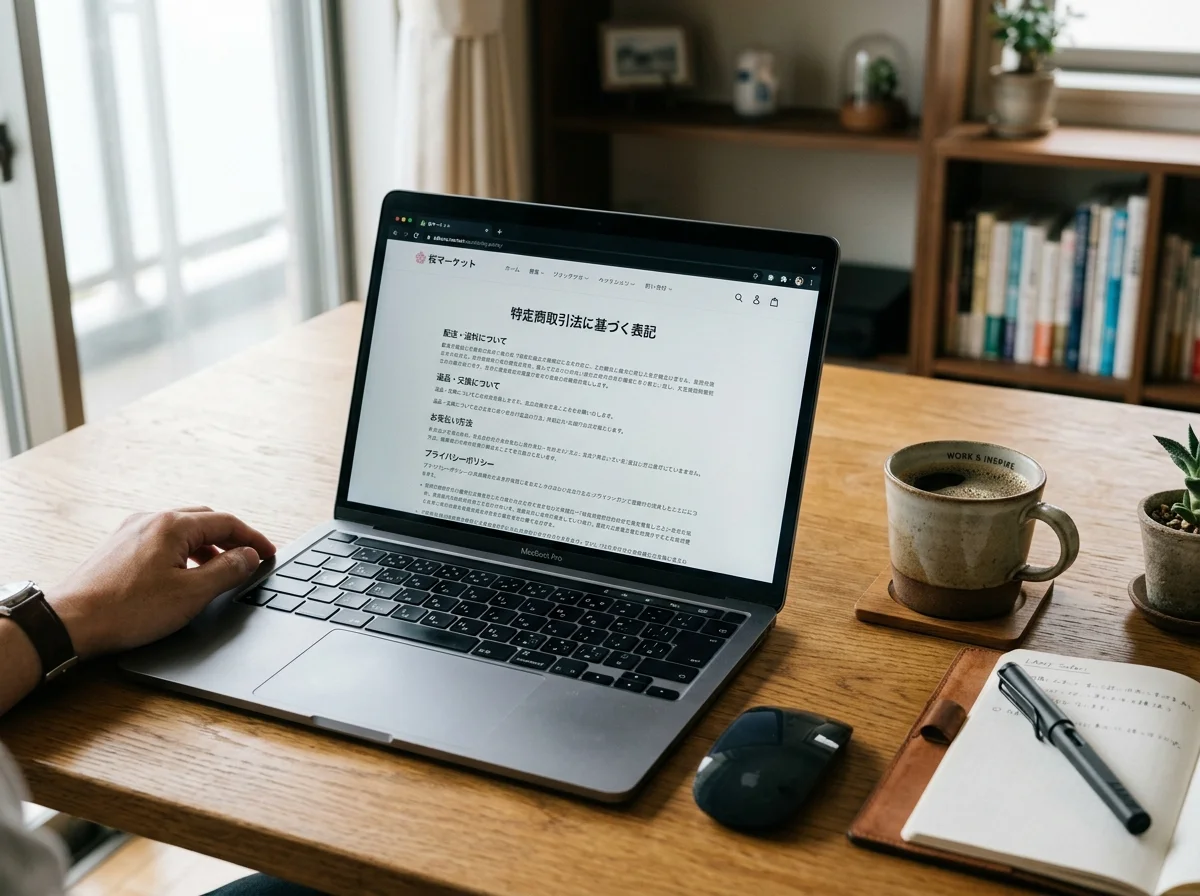
The Legal Page You Probably Forgot: 特定商取引法に基づく表記
Before any of the customer-facing policies, there's the page that's legally required: 特定商取引法に基づく表記 (Notation Based on the Specified Commercial Transactions Act). This is non-negotiable for any business selling to consumers in Japan — including foreign Shopify stores shipping into Japan.
According to Stripe's compliance guide and Adyen's market documentation, the SCTA applies even when you have no entity in Japan, as long as you sell to consumers located there. The required disclosures must be displayed in Japanese on a dedicated page, typically linked from your footer.
What you must include:
- Legal business name (in Japanese characters where applicable)
- Representative or operations manager's name
- Business address (full, not a P.O. box)
- Phone number (must be a real, answerable line)
- Email address
- Product prices including any additional fees
- Payment methods accepted
- Payment timing
- Delivery timing (specific windows, not vague ranges)
- Return policy — this is critical (see next section)
- Defective product handling procedure
The page name itself should be exactly 特定商取引法に基づく表記 — Japanese consumers look for it specifically, and seeing it builds immediate trust because they know you're complying with the law.
The 8-Day Trap in Your Return Policy
Here's the part that catches international stores off guard: under the SCTA's mail-order sales (通信販売) provisions, if you don't explicitly state your return policy in Japanese on your storefront, you're legally bound to accept returns within 8 days of delivery for any reason.
This default isn't a small risk — it can swing your return rate dramatically if you're selling categories where buyer's remorse is common. The fix is straightforward: write a clear, specific return policy in Japanese and display it prominently. But it has to be in Japanese, written in proper keigo (polite form), and unambiguous about:
- Conditions under which returns are accepted (defective only, vs. unconditional, vs. specific cases)
- Return window (e.g., 14 days from receipt)
- Who pays return shipping
- Refund timing and method
- Items excluded from returns (e.g., undergarments, sale items, opened cosmetics)
Vague language defaults to the consumer's interpretation under Japanese law. Specificity protects you.
The Four Customer-Facing Policies
Beyond the SCTA page, four standard Shopify policies need translation. Each has Japan-specific nuance:
| Policy | Japan-Specific Considerations |
|---|---|
| Shipping policy (配送ポリシー) | Specific delivery windows expected (Yamato, Sagawa, Japan Post timings); customs and import duty disclosure for cross-border; package tracking is a baseline expectation |
| Return & refund policy (返品・交換ポリシー) | Must comply with SCTA defaults; explicit conditions in keigo; specific exclusions; Japanese consumers expect detailed scenarios |
| Privacy policy (プライバシーポリシー) | Must comply with Japan's Act on the Protection of Personal Information (個人情報保護法); cross-border data transfer disclosures if hosted outside Japan |
| Terms of service (利用規約) | Japanese contract conventions differ from Western templates; jurisdiction clauses should specify Japanese courts if you're targeting the market seriously |
Shopify ships English defaults for all four. None of them are appropriate for Japanese customers as-is — not even after machine translation.
Why Machine Translation Fails on Policy Pages
Tools like Shopify's free Translate & Adapt or DeepL produce serviceable output for product specs (dimensions, materials, colors). Policy pages are different, for three reasons:
- Keigo (敬語) is invisible to machine translators. Japanese has multiple politeness levels (sonkeigo, kenjogo, teineigo). Business communication, especially policies, requires consistent and correct keigo throughout. Machine output reads as either too casual (insulting) or inconsistent (untrustworthy). Native Japanese speakers notice immediately.
- Legal terminology rarely maps one-to-one. "Refund" in English maps to several different Japanese terms (返金, 払い戻し, 返品時の返金) depending on context. Get it wrong and the meaning shifts in ways that matter legally.
- Cultural defaults differ. A Western privacy policy starts with "we respect your privacy" boilerplate that reads strangely in Japan, where consumers expect specifics about data handling first, not reassurance.
The practical rule: machine-translate as a starting draft, then have a native Japanese speaker (ideally one with e-commerce or legal experience) review and rewrite. Budget $200-500 for the policy package — freelancers on Gengo or Conyac handle this routinely. It's a one-time cost; the savings on returned goods alone usually pay for it within weeks.
Three Translation Approaches Compared
| Approach | Cost | Quality | Best For |
|---|---|---|---|
| Machine only (Shopify Translate & Adapt, DeepL) | Free | Risky — legally and reputationally | Testing the market; not for live policy pages |
| Native translator (freelancer or agency) | $200-1,000 one-time | Highest quality, properly keigo-aware | Stores serious about Japan; the right answer for policy pages |
| Hybrid (machine draft + native review) | $100-400 one-time | Near-native quality at a discount | Most stores — good balance of cost and quality |
Don't try to find shortcuts on the SCTA page specifically. That one needs to be exactly right because it's both legally required and the page Japanese consumers explicitly look for as a trust signal.
Where to Find Translators (and What to Pay)
The "Shopify Japan experts" search results are a mix of agencies, freelancers, and Shopify Plus partners. The honest landscape:
- Freelance translators — Gengo and Conyac for transactional work; Upwork for ongoing relationships. Best for policy translation specifically. Look for Japanese natives with e-commerce or legal background.
- Shopify Plus partners with Japan focus — Shopify Partner Directory filtered for Japan-based agencies. Worth it if you need full localization (translation + design + payment integration + ongoing support), expensive overkill if you just need policy pages translated.
- Translation agencies — specialized localization firms like Honyaku Center, Crimson Interactive's Ulatus, or local Tokyo agencies. Higher cost, higher consistency, useful if you have a large catalog.
For just the SCTA page plus the four core policies, expect $300-800 one-time with a quality freelancer, or $1,000-2,500 with an agency. This is a small one-time investment compared to the ongoing risk of unsigned-off legal pages.
The Problem That Doesn't Go Away After You Translate

Here's the part most "translate your Shopify store" guides skip entirely.
You translate your shipping policy. A customer in Osaka reads it. They have a follow-up question that the policy doesn't quite cover — "I see you ship to Japan in 5-7 days, but can you split the order so part ships to my apartment and part to my office?" They type it in Japanese, into your chat widget, at 11pm.
What happens next?
If your storefront chat is English-only, or worse, you have no chat at all, that customer closes the tab. You'll never know it happened. CSA Research finds 76% of consumers prefer buying in their own language. Baymard Institute puts cart abandonment at around 70% on average, with unanswered questions a leading cause. Translating the page once doesn't solve this — the questions are forever.
The cost math here is brutal. You spent $500 translating your policies. Then you lose $50 in revenue every time a Japanese customer asks a follow-up question your storefront can't answer in their language. After ten lost customers, you're underwater on the whole project.
The Fix: AI That Speaks Your Customer's Language
The practical solution for the support layer is a multilingual AI chatbot grounded in your own translated policies. The setup pattern:
- Translate your policies properly (one-time, as covered above)
- Add the policy text to your chatbot's FAQ knowledge base — in English is fine
- The chatbot serves answers in Japanese (or any other language) on demand, drawing only from your written policies — no hallucinated shipping rates, no invented return windows
This is exactly what Annona Bot is built for. You write your FAQ content once in English; the AI handles the translation layer for every customer question, in 50+ languages including natural Japanese with proper keigo. Setup on Shopify takes about five minutes — one script tag in your theme, walked through step-by-step in our Shopify integration guide.
The architectural point: translate the policy pages once because they need to be legally precise. Translate the customer conversations dynamically because there are infinitely many of them and you can't write them all in advance.
Practical Sequence: From English-Only to Japanese-Ready
If you're starting from a typical English-only Shopify store and want Japanese customers to actually convert, here's the order of operations:
- Hire a native translator for the SCTA page and your four core policies. Budget $300-800. Do this first — the legal exposure is the highest-priority risk.
- Publish the SCTA page at a clear footer link with the exact title 特定商取引法に基づく表記. Make sure all required disclosures are present.
- Replace Shopify's default policy pages with the Japanese translations via Shopify Markets + Translate & Adapt (or your translation app of choice).
- Verify keigo and legal terminology with a second native reviewer if your store handles sensitive categories (cosmetics, supplements, electronics with warranty implications).
- Add a multilingual chatbot to your storefront so customer questions about those policies get answered in Japanese, instantly, in proper keigo. Annona Bot covers this in five minutes — 14-day free trial, no credit card.
- Test the full flow in Japanese — browse, find a product, ask a sizing question in Japanese, ask a return question, complete checkout. If anything feels off, your customers will feel it ten times more.
The pages plus the chat widget together get you from "translated store that confuses Japanese customers" to "store that converts Japanese traffic." The pages alone won't do it.
What This Costs vs. What It Returns
| Item | Cost | Frequency |
|---|---|---|
| Native translator for policies + SCTA page | $300-800 | One-time |
| Translation app (Shopify Translate & Adapt or Weglot) | $0-30/mo | Ongoing |
| Multilingual chatbot for customer questions | $49-149/mo | Ongoing |
| Total Year 1 | ~$900-2,000 | — |
Compare to the alternatives:
- Hiring a Japanese-speaking support agent: $2,000-3,000/month
- Cost of one administrative penalty under SCTA: variable but reputationally severe
- Lost sales from English-only support to Japanese visitors: invisible but compounding
For most stores serious about Japan, the policy translation + multilingual chatbot combination is the cheapest possible path to a properly localized customer experience. If you want the broader localization picture — Shopify Markets setup, payment methods, SEO, and more — the complete Shopify Japan localization guide covers it end-to-end.
Getting Started
Two concrete next steps, in order:
- Audit whether you have a 特定商取引法に基づく表記 page. If not, that's the first thing to fix. Hire a native translator this week.
- Add a Japanese-capable chat widget to your storefront. Even before the policies are perfect, having an AI that can answer customer questions in Japanese closes the most expensive gap. Start a free Annona Bot trial — one script tag, multilingual out of the box, no credit card.
Translating your policies is the legal floor. Answering Japanese customer questions about them is what actually converts the traffic. Do both, in that order, and you'll be ahead of 90% of foreign Shopify stores selling into Japan.